

Trailblazing surgeon led WWI medical camp efforts in Europe

Twenty years after the first woman graduated from the University of* Buffalo Medical School, a woman who made a name for herself in the medical community around the world received her degree and started a career that still impresses today.
Early Days
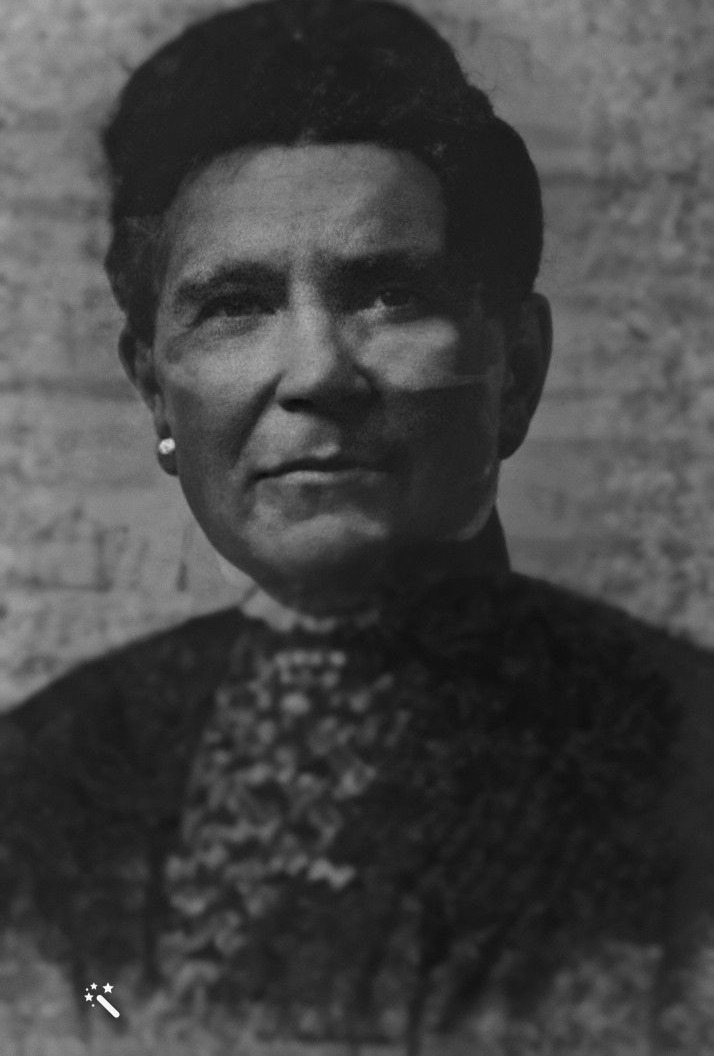
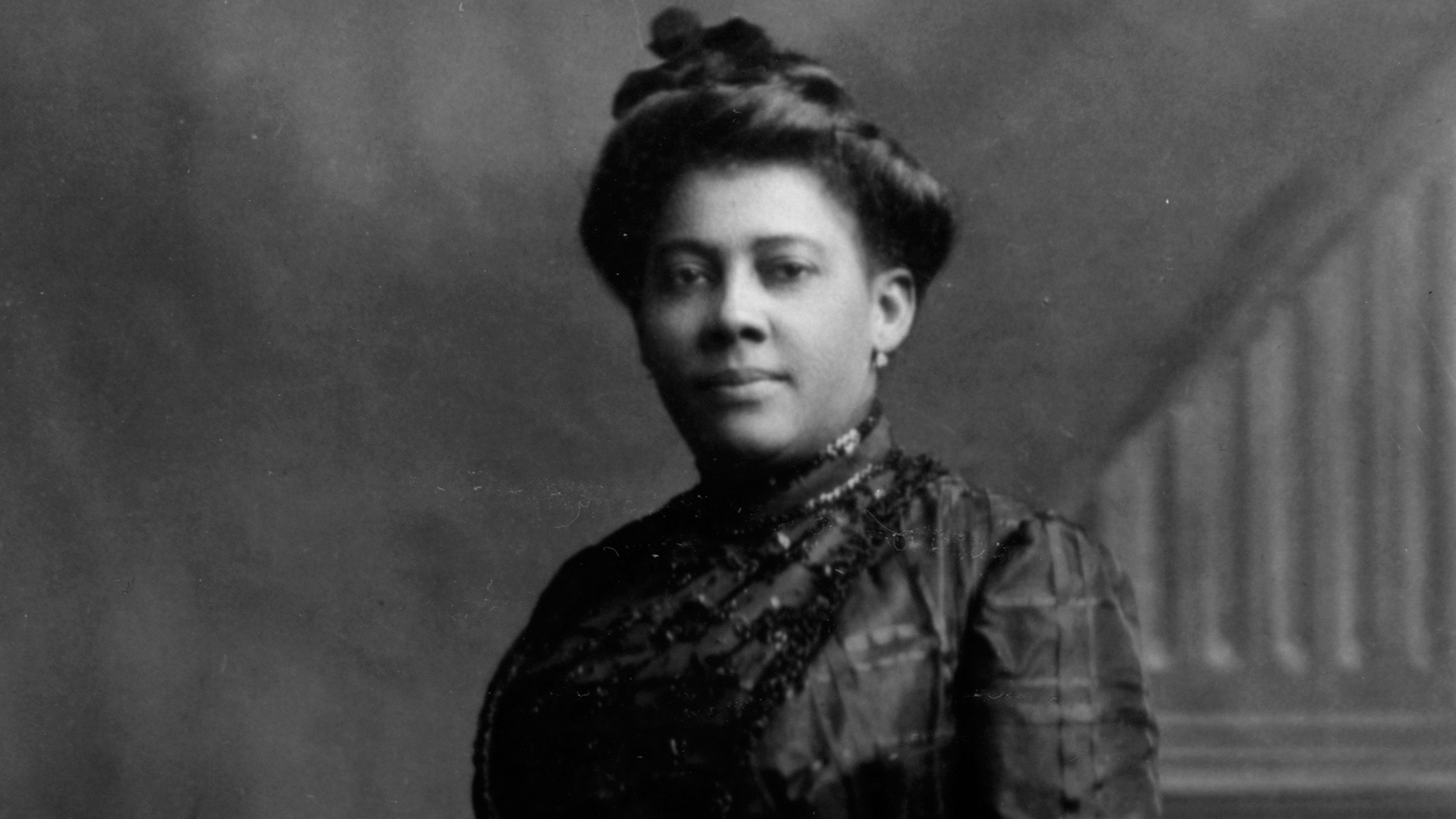
Keyes was a third-generation physician born in Elmira, NY in 1870. Her maternal grandfather, Dr. Patrick R. Flood, was surgeon for the 107th New York Volunteer Infantry during the Civil War and two-term Elmira mayor. She attended the Academy of Our Lady of the Angels in Elmira, then Syracuse University, and graduated from UB’s med school in 1896 – becoming one of the first female surgeons in the state.
Making a Name for Herself
About a year after graduation, Keyes wrote a report for the Buffalo Medical Journal (1) of a clinical lecture given by Dr. Montgomery A. Crockett, “A Case of Uterine Myoma,” after the surgery was performed at Riverside Hospital. The 1901 Buffalo City Directory (2) lists her as a staff surgeon (obstetrician) at Buffalo General Hospital on High Street with a home practice at 180/162 Allen St. She lived with her mother, sister, niece, a boarder and a member of household staff. (3)
A 1903 article in the Sunday Buffalo Courier (see image below) profiled Keyes alongside Cecil B. Weiner, one of the first two female graduates of UB’s law school, and Ida C. Bender, superintendent of the Buffalo schools’ primary grades. (Bender would go on to receive her M.D. degree from UB, as well.) (4)

“A woman who wishes to become a surgeon must have grit, endurance, vitality, and must be in good physical condition,” Keyes was quoted as saying. “She must be able to hold her own at all times… and to ensure anything which may come up. If she has a call when about to start to the opera, she should relinquish her social engagement and attend her patient. This is necessary.”
She went on to say, “Any Buffalo girl, who has the mental ability to stand the strain, the physique to take the necessary hardships, however, has a good opportunity to become a successful physician. It remains with herself.”
Making Headlines
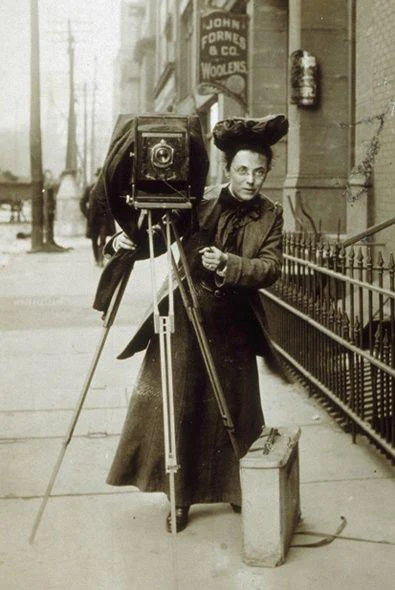
Buffalonians were fascinated with details from two scandalous murders in 1903. The first, the murder of Edwin Burdick. Refer to the previous BBB post about Jessie Tarbox Beals to learn more!
The second: Medical student Dr. Leland Dorr Kent was charged with assisting in the suicide of his lover, Ethel Blanche Dingle, a nurse, in a room at the Whitcomb House. When she heard that Kent was found guilty, his wife “moaned piteously for her Lee,” shrieked and collapsed. (5) She was brought home to Buffalo via train and given over to Keyes’ care. Keyes and Dr. Floyd S. Crego, whom she called in to consult, agreed that Mrs. Kent “has completely lost her mind, past events being an entire blank.”
Later that year, Keyes struck a nerve with at least one local official after ranking No. 1 on the Civil Service list for district physician for the third consecutive time – scoring a perfect 100. The first two times, Health Commissioner Walter D. Greene ignored Keyes and named two men to the job, clearly stating he did not want a woman in that role. Never mind the fact that Keyes had already been serving as acting district physician in the Elk Street area, replacing the resigning Dr. George F. Cott.
“I have been at the head of the list for some time past, and I propose to keep at the head of it for a good many more years to come, or until I get an appointment,” she told reporters. (6)

The Buffalo Courier summed up the situation perfunctorily with the headline, “A woman with no vote – No business in politics”
Keyes was vindicated when the Erie County Hospital Board made her a member, replacing the resigning Dr. Earl Lothrop, with whom Keyes had worked at the hospital for at least two years. She was already on the board of Buffalo General Hospital.
“Dr. Keyes’ appointment…gives general satisfaction to the physicians and surgeons of this city, by whom the woman doctor is held in high esteem,” wrote the Buffalo Courier. (7)
One more appointment came about a week later -perhaps in hindsight a somewhat dubious victory: “Dr. Keyes Appointed: Well-Known Woman Physician Named an Examiner in Lunacy,” read the Buffalo Enquirer headline. (8) Keyes became the first woman named to that job, required by a new law governing lunacy examinations.
Just Another Working Woman Physician
In 1904, Keyes assumed Montgomery’s UB Medical School faculty position when he took a year off for rest and travel. By that time, she has been his assistant and “connected with the university in the department of woman’s surgery for the last seven years. She has made a high reputation in general surgery for her skill and success. She is regarded as the most accomplished woman surgeon in the country between the Atlantic coast cities and Chicago.” (9)

Keyes was one of several female physicians working in hospitals and/or maintaining private practices in Buffalo around that time. The 1907 “Women’s Medical Society of New York State Constitution and By-Laws” (10) listed Buffalonians Electra B. Whipple, Ida C. Bender, Maude J. Freye, Alice K. Bennett, Martha F. Caul, Nellie V. Choppell, Mary Innis Denton, Elizabeth Dort, Lillian C. Randall, Marie R. Wolcott, Elizabeth M. Schugens, Mary N. Sloan, Amelia Earle Trout, Jane N. Frear, Edith R. Hatch, Jeanette Himmelsbach, Helene J. C. Kuhlman and Adele Gleason as members of the Eighth District, comprised of the eight counties of WNY. Marjory J. Potter of Niagara Falls; Mary T. Greene, Helen D. Justin and Mary I. Slade of Castile; Elizabeth M. Squires of Albion; Selina P. Colgin of Salamanca; Cora Belle Cornell of Warsaw; and Mary C. Hurlburt of Lockport also were listed as members.
Keyes specialized in gynecology, and in 1916 wrote an article for the Buffalo Medical Journal (11) about post-operative “abdominal section” care. (An “abdominal section” surgery for women can mean many different procedures, including hysterectomy, ovarian surgery and C-section. (The fact that Keyes wrote, ‘From the first the patient should be encouraged to help herself…’ showed it to be in reference to a gynecological procedure.) The article listed her as “woman gynecologist” at Buffalo General Hospital; obstetrician at Erie County Hospital (later Buffalo City Hospital then Meyer Memorial Hospital and eventually Erie County Medical Center); obstetrician at St. Mary’s Hospital; and clinical instructor in obstetrics at UB Medical School.
Women Went ‘Over There’ Too
And then came World War I.
The war in Europe was raging when in 1914 Keyes – “this noted woman, regarded as one of Buffalo’s greatest surgeons…the only woman in the state said to be credited with performing a Caesarian operation” (12) – traveled to Europe to study wartime surgical conditions in London and Paris.
After the U.S. entered the conflict in 1917, Keyes took a leave of absence to join the American Red Cross. She and her cousin, Dr. Mabel Flood of Elmira, were sent to Serbia to take charge of a hospital in the Balkans and were the first to don the uniform of the American Woman’s Hospital. (13) They served in the medical corps on the Salonica/Macedonia front during the Allied forces’ offensive the following year, aiding the Serbs in their fight against Germany, Austria-Hungary and Bulgaria.

Beginning with meager supplies in an abandoned Turkish school, their American Women’s Hospital eventually became “one of the best in all Serbia.” (14) With Regina as hospital director and surgeon and Mabel as chief physician, they treated locals and military personnel, battling through epidemics of flu and typhus. For a time, Keyes even served the French Army as a regimental surgeon.

“During the last campaign, Dr. Keyes volunteered to follow the French Colonial Army on its advance into Serbia,” detailed a report in the April 1919 edition of the Woman’s Medical Journal, which featured regular news about American Woman’s Hospitals. “She was accepted and accompanied the army for three weeks, operating for days and nights at a time.” (15)
Keyes and her cousin took charge of a building that was “depressingly filthy and its sanitary arrangements were those of the Middle Ages,” enlisted the help of a Serbian architect and a platoon of Bulgarian prisoners to clean, whitewash and remodel it into a medical facility. A Czech carpenter made her a Trandelenberg table – used for lower abdominal and pelvic surgeries – from a large packing crate. Sterilizing tins were made from discarded peach cans. Screens were made from plain sheets. (14 again)

Their efforts were featured amid newspaper articles about battles and military actions, advertisements to “Buy Liberty Bonds,” and daily casualty lists. “Heroic Service of Yankee Women Doctors in War” read one. “American Women Fight Disease in the Balkans” read another. In a letter to the American Woman’s Hospitals of New York City, she “admitted” to using donations to buy Christmas presents for Serbian children, especially dolls. “Don’t scold,” she wrote. “Some time ago, 12 dolls came in a Red Cross box to Vodena, and never in all my travels have I seen such joy as those dolls brought to old and young. Neither these children nor the grown-ups had ever seen real dolls, and they hugged and kissed them, till tears came to my eyes.” (16)

Accolades poured in after the war. The women were honored by the Greek government for their work in Greek and Serbian hospitals, and the French, Serbian and Belgian governments recognized their devotion to duty. Both women remained in Europe through 1920.
Personal Life
As best as the author can tell, Keyes was married four times. Details are scant.
- An “absolute divorce” from Dr. William C. Keyes was granted to Regina on Dec. 27, 1899 by a judge in Whatcomb County, Washington, where William had returned. He was a UB graduate and had been a surgeon at Erie County Hospital.
- On March 18, 1905 she married Dr. Gurdon Potter in her Allen Street home. He was the son of the U.S. Navy commodore once in charge of Buffalo’s lighthouse district.
- On her 1917 US Passport application (17), Keyes listed Harry Bluntach Keyes of Rochester as her husband. The paperwork included a memo discussing what to do when a man takes his wife’s name and a woman retains her name. The memo writer recommended that she be identified as “Regina Flood Bluntach, professionally knows as Regina Flood Keyes.” Also among the application paperwork was a telegram from Keyes herself explaining that the name Bluntach is Scottish, not German – “their (sic) never being any German blood in them.” (18) By 1919, when she had to renew her passport yet again, they had divorced.
- On Sept. 9, 1920, Keyes married Quincy Franklin Roberts, US Consul at Apia in Samoa. A reception following the ceremony was given at Vailima, Samoa’s Government House. She was 40, he was 30. They remained married until her death.
Her listing in the 1917-18 Who’s Who in New York City and State says she was a member of the Eastern Star (Masonic Order) and the Woman’s Union.
Later Years
After her marriage to Roberts, Keyes accompanied him on his posts around the globe. From Samoa to Fiji and French Indo China, she worked to better the lives and healthcare of the women and children in those communities. In 1924, to Samoan Royal Family adopted her and gave her the royal title of “Samalaulu.”
When World War II erupted in the Pacific, Keyes and Roberts were living in Chefoo, China, where he was U.S. Consul. They were interned by the Japanese. In May 1942, an agreement was reached to transfer women, children and men over the age of 60. Keyes and the other prisoners to be transferred set sail aboard the Italian vessel Conte Verde in Shanghai bound for East Africa. Keyes died on July 10 from peritonitis.
References & More Info
*Yes, it was known as the University of Buffalo at that time.
1 Crockett MA, Keyes RF. A Case of Uterine Myoma. Buffalo Med J. 1897 Feb;36(7):511-514. PMID: 36884519; PMCID: PMC8660461.
2 Buffalo City Directory 1901
3 1900 US Census
4 Sunday Buffalo Courier, Jan. 25, 1903 p. 33
5 Buffalo Courier, May 18, 1903
6 Buffalo Enquirer, Dec. 8, 1903 p. 10
7 Buffalo Courier, Sunday, Oct. 19, 1902 p. 5
8 The Buffalo Enquirer, Oct. 26, 1903 p. 6
9 The Buffalo News, Oct. 28, 1904 p. 5
10 Blackwell Family. (1836) Blackwell Family Papers: Elizabeth Blackwell Papers, -1946; Miscellany, 1858 to 1946; Printed matter; 5 of 11. – 1946. [Manuscript/Mixed Material] Retrieved from the Library of Congress, https://www.loc.gov/item/mss1288001321/.
11 Keyes RF. Some General Considerations in the Post-Operative Care of Uncomplicated Abdominal Sections. Buffalo Med J. 1916 Jan;71(6):289-291. PMID: 36887586; PMCID: PMC8737164.
12 The Buffalo Times, Nov. 2, 1914 p. 4
13 International Medical Journal Medicus, ISSN 1409-6366 UDC 61 Vol · 20 (2) 2015
14 Buffalo Evening News, June 9, 1919
16 New York Times Sunday Dec. 29, 1918 p. 30
17 1917 US Passport application
18 ibid.