
‘The Angel of Canal Street’
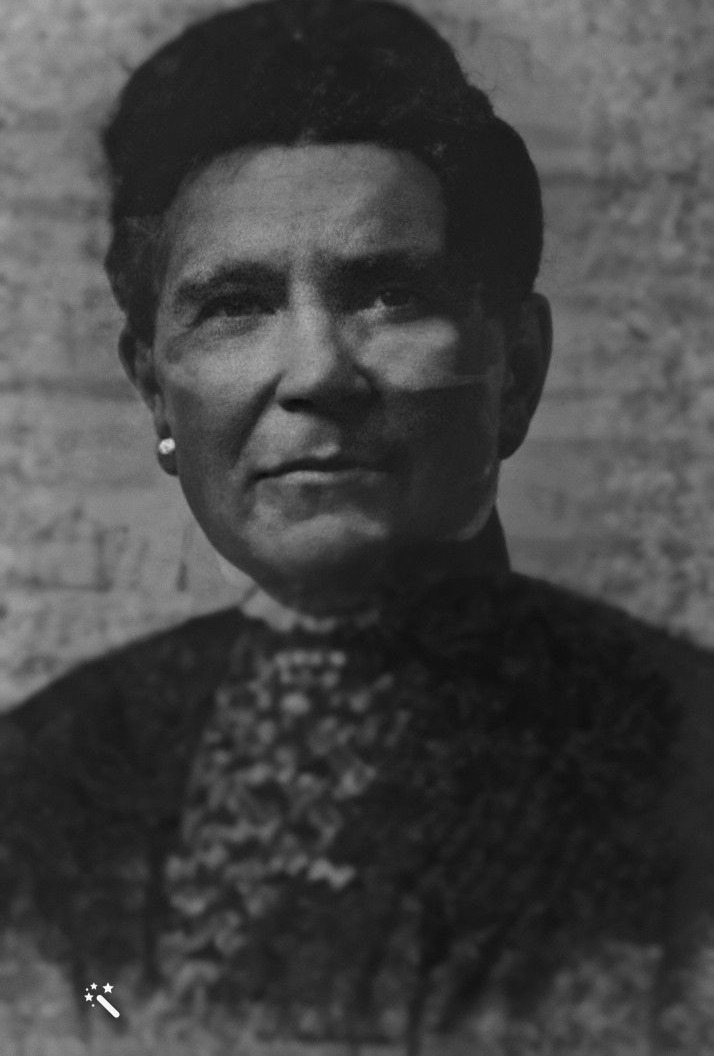
The daughter of a wealthy family, Mary Elizabeth Remington was only 10 when she assumed temporary care of an infant boy whose mother had died. She was a public school teacher by age 16 and leader of a mission for the poor in New Haven, Connecticut a few years later. Those early experiences set the stage for 50-plus years of caring for some of Buffalo’s neediest and most desperate residents.
And she wasn’t afraid of hard work to reach her goals. An entry in “Extracts from the Journals of Miss Mary E. Remington, Missionary of the Welcome Hall Mission, New Haven, Connecticut,” published in 1892, shares this amusing example:

Remington came to Buffalo in November 1894 to lead the outreach work of First Presbyterian Church’s Women’s Circle. At that time, The Charity Organization Society divided the needy areas of the city into districts, each one cared for by a church.
- The Christian Homestead Association (creators of that infamous 1893 map seen later in this article!) incorporated in 1891 at 163 Canal St. thanks to an anonymous charitable gift. It was run by Miss Joanna D. Cutter and her eventual husband, Walter N. Hinman, until their deaths a month apart in 1896. (1)
- The Salvation Army came to Buffalo that same year. They opened a Food and Shelter Depot on Commercial Street in May 1893 named “The Ark,” serving as a place for the unemployed to get temporary help to get back on their feet. (2)
Remington settled into a building at 307 Seneca St. – not exactly within the Canal District, but not too far away from it – and named it Welcome Hall after the one she had led in New Haven. The District Nursing Association helped start a “diet kitchen” there, and Sunday schools and sewing schools started soon thereafter. The operation outgrew the building by the end of the year, so they expanded into a warehouse on the property. (3)
By 1897 the operation had outgrown itself yet again, so work began on a new Welcome Hall. Opening in January 1898, the new building offered rooms for 12 residents (women in the cottage and men in the Hall); a library room operated by the city’s library system; a gymnasium; a laundry; and of course, a diet kitchen. Nearby residents came for “athletic games and exercises, entertainments and social gatherings” (4) and classes in sewing, cooking, basketry, typewriting, stenography and printing. Religious services and Sunday schools were held weekly.
Disagreements among leadership led to Remington resigning her connection with Welcome Hall in 1898. Remington knew that “practically nothing was being done for the residents of Canal Street, with its many saloons, dance halls of ill repute, and houses of vice. ‘There the need is greatest,’” she thought. (Buffalo Courier-Express Aug. 27, 1933, p. 4) So, she set her sights on establishing a “Gospel Settlement in the Canal Street quarter, which has always been of the worst possible repute.” (5)
“Worst possible repute” was an understatement. Canal Street – a “short, cobblestone-paved challenge to sobriety” (6) – ran parallel to the Canal between Commercial and Erie streets. It was known as “The Wickedest Street in the World.”*
- “Even the mildest critics are agreed that Canal Street during the peak of its notoriety was a lusty, brawling, bawdy section of the city, inhabited by people who were not exactly acceptable in the more polite segments of Buffalo society.” (“Canal St: Rough, Colorful Crime Tinge is Recalled,” by Clare Allen, Buffalo Courier-Express, Dec. 24, 1962.)
- “It is almost a solid mass of saloons, brothels, dives and depots for the reception of stolen goods,” wrote a special correspondent in the April 13, 1897, issue of the Rome Daily Sentinel. “There are 20 concert saloons in full blast, afternoon and evening, advertising free shows or 5-cent shows under fancy names. These are all brothels. In fact, no saloon in the street is free from this curse. The number of fallen woman on the street is estimated at over 300.”

If that map isn’t convincing enough in showing how rough the area was, here’s “A Timeline of (Mainly) Terrifying Events in the Canal District,” 1834-1936, first featured in Vogel’s book and now available via New York Heritage. Stabbings, shootings, murders, explosions, fights, fires, riots and much more tell a frightening and sad story of this part of the Queen City.
Nevertheless, Remington and a few colleagues from Welcome Hall ventured into the District with hopes of making an even bigger impact on the lives of those most in need than they had at Welcome Hall. They started in freight shed rooms of the Grand Trunk Railway station on Erie Street, just below the Canal. But they quickly realized they wanted to do more, and they needed a building of their own.
They were drawn to a five-story tenement building in what was known as “the old Revere Block” in the Erie/Canal streets area. The building was once a railroad terminal hotel but had since become one of the worst slums in the district. More than 1,000 people lived in the building – some in single rooms, others in partitioned cubicles in the damp, dark basement. (7) She talked the owner into selling the building to her, and with help from Mrs. George H. Lewis in 1898 signed the lease “while learning against the bar in the first-floor saloon.” (8) The price was $10,000 – nearly $400,000 today! – which she paid down in $500 or $1,000 annual increments.

“Do you remember, Alice, when we decided to buy the Revere Block?” Remington asked her longtime friend and fellow settlement worker, Alice Wadge, during a 1943 interview with the Buffalo Courier-Express.
“’You mean when you decided to buy it,’ Wadge replied, coloring slightly.”
Remington Gospel Settlement opened its doors in May 1898, with Remington as landlord, cook, teacher, pianist, leader of religious services “and friend to the needy regardless of race, creed, age or reputation.” (9) Along with needed structural improvements, Remington also reduced occupancy from more than 1,000 people to around 400 people. No more crowding into the basement; that area was remade for wood chopping and storage.
“The clubs and classes were crowded. Mothers’ clubs, the Band of Hope, the Sunday school, the industrial classes, sewing and cooking for the girls and manual training, shoemaking and other work for the boys; the gymnasium, the boys’ and girls’ clubs, the Scout groups for both sexes…were among the activities which kept Remington Mission workers busy from morning until night.” (10) A Wednesday evening class for girls called “Friendly Workers” taught them how to do housework, sew, and trim hats. Mothers gathered Wednesday afternoons for lessons in “plain sewing” followed by a light lunch, tea, and cake. (11)
Remington didn’t just work in the area, she lived there. This image from the 1900 US Census shows Remington, Wadge (her maiden name was Hejde) and Wadge’s eventual husband, William Wadge, living at 150 Canal St. (later Dante Place), site of the Mission:

Thankfully, all of their effort did not go unnoticed:
- “Fine mission work: It is being done by Miss Mary E. Remington at Erie and Canal streets,” said the Dec. 20, 1909 Buffalo Commercial
- “Mission stands testimonial to work being done by one woman,” said the May 17, 1914 Buffalo Courier.
- “Grand work of mercy and reform: Woman reared in the lap of luxury devotes her life to the poor,” read the Oct. 11, 1900, p. 12, The Buffalo Enquirer.
- “Miss Remington’s settlement doing spending work in bringing up children,” said The Buffalo Times on Oct. 27, 1907, p. 49.
And when Remington recovered from diphtheria:

In 1904, Remington published a report** about the work being done at the Settlement.
“Miss Remington speaks about the many hardships and vicissitudes encountered during the past few years, the many dark nights when it almost seemed as though there could be no gladsome dawn for the settlement work and of the silver lining that glinted through the clouds at just the right moment.” (Buffalo Evening Times, Aug. 3, 1904)
Remington got around the District for many years on a bicycle. (Read a forthcoming BBB post about the impact bicycles had on enabling women’s independence.) But Mission residents wanted better for her, so they took part in a contest sponsored by the Larkin Co. They bought $8,000 worth of products, giving Remington enough credit to buy a car. Of course, she took many of those residents for their first car ride! (12)

For 17 years, the Mission also operated a “fresh air lodge” for children in the former International Hotel in Fort Erie, Ontario.

Remington spoke often about her work at meetings, conventions, and classrooms:
- In July 1895 she represented Welcome Hall at the Christian Endeavor convention in Boston, Mass.
- In February 1902 she addressed the National Congress of Mothers in Washington, D.C. about “Mothers’ Clubs and Kindergartens in the Slums.”
- On Dec. 11, 1905, she testified before the Probation Commission of the State of New York at the Iroquois Hotel. She spoke about the success of the city’s probation system in connection with the juvenile court.
- “She told of the reformation of bad boys,” wrote The Buffalo Times. “She also related how young girls were reformed.”
- “One boy would not go to school. No one seemed to have a kind word for him,” she told the commission. “I saw by his look that he only wanted someone to say a kind word to him. He said he was willing to go to school if he could be in the same class as ‘Tony.’ I found out who Tony was and arranged that they should be in the same class, and there has been no trouble with him since.” (The Buffalo News, Dec. 12,1905, p.7)

Remington and several other Badass Buffalo Babes were among the newly organized Suffrage League of Self-Supporting Women:

- In May 1911, she was one of the speakers at the 19th Annual Convention of the Erie County Union of the Christian Endeavor Society.
- The Buffalo Historical Society’s list of 1909 speakers included Remington, who talked about “Social Settlement Work Among the Italians of Buffalo.”
- On Dec. 3, 1909, she spoke to Lafayette High School students about her mission work. The school donated some of its Christmas money to help Mission children have a happy holiday.
- She addressed the annual meeting of the Sunday School Association of Lancaster and Cheektowaga on June 20, 1910.
As if the Settlement didn’t keep her busy enough, in 1908 she looked beyond the city line, launching a fund drive to help “starving families of West Seneca.”

By 1910, the Settlement had grown so successful that it faced a dubious challenge: It needed more teachers!

Like many of our Badass Buffalo Babes, Remington was listed in the 1914-15 Woman’s Who’s Who of America (13), citing her mission work in Connecticut and Buffalo, noting that she was in favor of suffrage. On Oct. 18, 1907, she was seated on stage with the likes of Rev. Anna Shaw and Mrs. Harriet Stanton Blatch at the Women’s Suffrage Associations’ state convention in Geneva, N.Y.
She never stopped working for her residents, even during the holidays:

By the 1920s, poor health forced her to cut back on physical labor. Around 1930 she left the city altogether, moving with Wadge to a home in Hamburg.
“Even there she did not forgot the needy, sending vegetables to them and knitting warm clothing for her children.” (14)
The Remington Gospel Mission continued through the 1930s, but by 1940 had grown so dilapidated that it was torn down. But before it became a pile of rubble, Courier-Express columnist H. Katherine Smith (a Badass Buffalo Babe in her own right!) wrote this remembrance:

Remington died at the age of 96 on July 5, 1955.
“Social work cannot be done at arm’s length,” she once said. “Its purpose is not to relive the poor of their burdens, but to give struggling men and women a lift and instill into their hearts the hope and courage to carry on.”

References & More Info
1 Larned, J.N. A History of Buffalo, Delineating the Evolution of the City. vol. 2, NY, The Progress of the Empire State Co., 1911. P. 101.
2 Vogel, Michael; Patton, Edward J.; and Redding, Paul F.: America’s Crossroads: Buffalo’s Canal Street/Dante Place: The Making of a City. Derby, NY, Acorn Books LLC, 1993. P. 231. Author’s note: If you want to learn much, much more about the Canal District, you NEED this book! It is chock full of information.
3 Larned p. 103
4 ibid p. 104
5 ibid p. 105
6 “Nickle Beers and Pickled Eggs: Even Carry Nation’s Outrage Didn’t Plug the Taps,” by Robert A. Schaefer, Buffalo Courier-Express, Jan. 24, 1982.
7 Vogel p. 236
8 Vogel p. 217
9 1955 obituary in The Buffalo News
10 “Dreams of Pretty Homes in City’s One-Time Lurid Area,” by Margaret Pyke. Buffalo Courier-Express Sept. 12, 1937, p. 43.
11 “Grand Work of Mercy and Reform.” The Buffalo Enquirer, Oct. 11, 1900, p. 12
12 1955 obituary in The Buffalo News
13 Woman’s Who’s Who of America: A Biographical Dictionary of Contemporary Women of the United States and Canada. Edited by John W. Leonard, NY, The American Commonwealth Co., 1914.
14 1955 obituary in The Buffalo News
*The author wonders: While there is no doubt Canal Street and the surrounding area was a boisterous, dangerous and unseemly locale, was Canal Street truly the “wickedest street in the world”? That moniker seems more aptly applied to The Bowery in New York City or San Francisco’s Barbary Coast. In fact, a 1922 film entitled “The Broadway Madonna: A Drama of the Wickedest Street in the World” takes place in San Francisco.
**The author is in search of a copy of the report. The closest she came is this listing.
Related Item of Interest
Jacob A. Riis apparently was well-known even before publication of his 1910 book, “How the Other Half Lives: Studies Among the Tenements of New York.” As a reporter, and later as an author, he exposed the vile conditions in which so many immigrants lived in New York’s poorest neighborhoods. The author wonders if Remington attended his 1902 lecture, and if the two shared stories about their experiences.