

Writer, World Traveler, Empowering Businesswoman
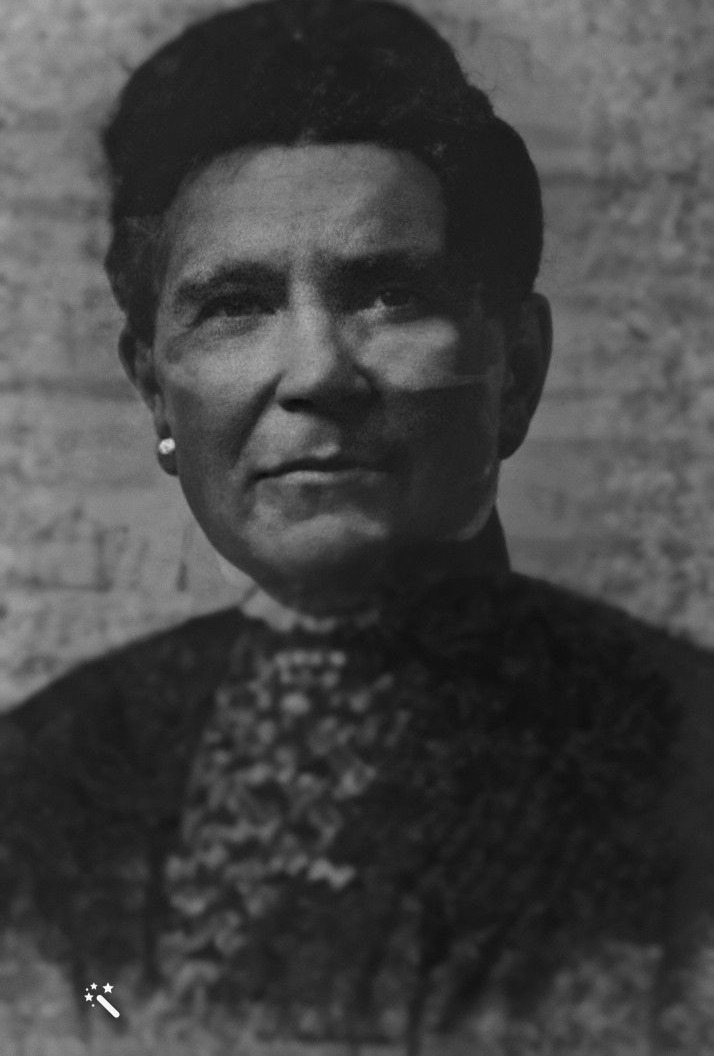
Once called “one of the most celebrated women writers on this side of the Atlantic,” (1) and “a deliciously original young woman,” (2) Grace Carew Sheldon made a name for herself in literary and business circles both here and abroad. She wrote for Buffalo newspapers as well as newspapers and magazines across the country.
She was born on March 25, 1855, one of nine children of Judge James and Sarah Carew Sheldon. She grew up in the family mansion, “The Evergreens,” at 1094 Main St., attending Buffalo Female Seminary (later Buffalo Seminary) then graduating from Wells College in 1875.

Putting Pen to Paper
From 1890-1900, Sheldon was a staff writer for The Buffalo Courier, often with a byline! In May 1895, she served as the railroad editor of the Courier’s 40-page woman’s edition – promoted heavily by the edition’s ad staff as “The Greatest Opportunity to Advertise Ever Offered in Buffalo!”


Sheldon edited the railroad page:


As this article noted, the final appearance was different than what was originally planned:

The women’s edition even had an official cracker!

The women’s edition sold for $1 a copy (about $39 in 2026 dollars) and was a success, collecting more than $9,000 ($356,807 in 2026 funds). After expenses, nearly $3,000 each (more than $117,933 in 2026 funds) was donated to The Fitch Creche and Free Kindergarten.
Later that year,the Courier sent her – the first female delegate – to the International Press Congress in Paris.

Throughout her trip she sent home reports, which the paper published, and a few years later she self-published them all in one book, “From Pluckemin to Paris.” (Pluckemin was a small town in New Jersey on the stagecoach route between Peapack and Somerville.)

She wrote a series of historic remembrances for The Times entitled “Buffalo of the Olden Time.” By 1920 the title had changed to “This Day in Buffalo’s History,” but Sheldon still had her byline!
By 1914 she was the department editor for the Buffalo Times and continued writing for newspapers and magazines across the country. The 1915 Buffalo City Directory lists her as “w Buffalo Times,” living at 819 Bird. Ave.
She was one of the first two women to ride New York Central’s “paper train” (which left Grand Central Station at 4 a.m. daily with morning editions of New York newspapers, stopping at cities all the way to Buffalo) in 1896.
She was named department editor of “The Household Realm,” a national magazine, in 1897:


Her second book, “As We Saw It ‘90”, features tales of her travels through Ireland and Scotland, including the “Oberamaggau Passion Play.”


Like “Pluckemin,” the book was well reviewed from coast to coast. For example, here’s a portion of the book’s review in the San Francisco Chronicle:

Literary syndicates sent her to Venezuela to cover “the boundary troubles,” (The Enquirer, Oakland, Calif., June 2, 1900). The Express sent her to Memphis, Tenn. in April 1903 to cover horrific flooding.
Gathering Women Writers
Sheldon was a charter member of The Scribblers, founded in 1893 by Buffalo women authors, newspaper women and others engaged in literary pursuits. (Learn more about fellow Scribblers members and Badass Buffalo Babes Marian DeForest, Charlotte Mulligan, and Jane Mead Welch in upcoming posts.)

She continued to travel to promote her book, and to speak about women in journalism. In November 1899, Sheldon spoke about “The Press” at a meeting of the State Federation of Women’s Clubs at The Eureka Club in Rochester.
“In all the land, there is not a more sincere champion of women’s work than the earnest newspaper women who are employed on every really great paper,” Ada Brown Talbot, editor of The Woman’s Club Magazine, told the nearly 1,000 women in attendance. (New York Tribune, Nov. 10, 1899) Also on the meeting’s agenda were speeches by Susan B. Anthony and the Rev. Anna H. Shaw.

Women Helping Women
In February 1832, on one of the city’s most fashionable streets, 17 wealthy Philadelphia ladies founded Philadelphia Ladies Depository, the first woman’s exchange in the country. Operating as a consignment shop, it provided a way for “decayed gentlewomen” – formerly wealthy women who had fallen on hard times – to earn money at a time when women like that just didn’t do that sort of thing. The shop found its niche by positioning its handcrafted items including clothing, accessories, and home décor as of much higher quality than the mass-produced goods coming out newly founded factories.
After the Civil War, women’s voluntarism exploded. They had come together to aid war efforts and wanted to expand on what they had accomplished. The 1876 Philadelphia Centennial Exhibition showcased women’s contributions to business and the arts, and the Women’s Pavilion “in particular testified to how eager benevolent women were to showcase many achievements that had been made in the home and workplace.” Women painters, sculptors, innovators, business owners were featured amid displays of art and needlework fashioned by women. **
In 1878, both the Woman’s Work Exchange and Decorative Arts Society in Brooklyn and the Exchange for Women’s Work on Fifth Avenue opened in New York City. The Rochester Art Exchange opened its doors in 1880, and a year later a woman’s exchange opened in Albany.
Sheldon didn’t have business experience, but she mustered her “determination… to have an institution in my native city which would always prove of immediate help to handicapped women.” (See the pamphlet below.) She was a fierce advocate of women shut-ins, encouraging them to use their hands to make things to sell, even if they could not use their legs. To make money to open a similar operation here, Sheldon presented a series of drawing-room talks in 1885 in her Main Street home. In May 1886 she founded Buffalo’s Woman’s Industrial Exchange (also known as simply the “Woman’s Exchange”) in offices on the third floor of the White Building, 292-298 Main St.


The Exchange operated there until 1900, when it relocated to the spacious Sheldon mansion, 1094 Main St., with its “fine, large showrooms.”
Makers came from across the country, and merchandise varied. An article in the Nov. 20, 1896 issue of The Albany (NY) Argus described “doylies in complete sets and centre pieces. There is a new idea show in in centre pieces which has a wreath worked in the centre. The electric blue silk pieces are most effectively seen at night.” Tablecloths, decorated picture frames, hair accessories, pocket sewing kits, and even decorated laundry bags were sold. Workers also were paid to clean fine lace or weave rag rugs, but the one common denominator was perfection.
“In every line I demand perfection and I get it,” Sheldon wrote in the pamphlet. “My contributors sing at their work, and weave into their productions selling virtues, which provide an intangible, but forceful, aid in selling them.”


Luncheon was served daily from 12-3 p.m.
That same year, this article appeared in the Oct. 10 edition of New York’s The Evening World, featuring another way Sheldon helped those in need:

Sheldon traveled coast to coast selling the Exchange’s wares and buying unique items from other parts of the country to sell here in Buffalo.
“She particularly desires the work of California women, which is very different from that of the East, owing in a measure to its foreign coloring, design and material,” wrote the Oakland, Calif. Enquirer on June 2, 1900.

By 1891, the nine largest exchanges (not including Buffalo’s) had paid more than $1.1 million to their consignors. That amounts to more than $36 million in 2026 dollars. Rochester paid its 219 consignors $2,890, and Albany paid its 200 consignors $2,824. That’s about $105,761 and $102,300 in 2026 dollars, respectively. Unfortunately, Buffalo’s exchange did not report its information.

Here’s a section of the pamphlet Sheldon wrote for the May 4, 1904 Buffalo Express in honor of the Exchange’s 18th anniversary:

The Exchange remained in operation for several more years, but Sheldon stepped away around this time.
Known around the Country
Sheldon – like most Badass Buffalo Babes – wasn’t idle for long, If she wasn’t writing, working at the Exchange or promoting its wares, she was traveling, speaking, and “getting herself out there,” as PR people might say. These clippings prove the point:


Prior to a 1902 trip to the nation’s capital, she wrote to President Theodore Roosevelet and asked for a meeting with Mrs. Roosevelt. Unfortunately, the Library of Congress only has a copy of the reply:

The President has requested me to acknowledge the receipt of your letter of the 3rd instant, and to thank you for your kind expressions. Regarding the suggestion which your letter contains, I beg to say that while Mrs. Roosevelt appreciates your courtesy, her time is so fully occupied she regrets to find it impossible to name an hour when she might call at the Arlington for the purpose named.
Very truly yours,
Geo. B. Cortelyou
Secretary to the President.
A New Way of Thinking
In 1906 Sheldon founded (during a meeting in the drawing room of her home) and was named president of the International Progressive Thought League. It was an organization of “persons who wish to get views of others with an idea of getting clearer ideas of what others believe and a better understanding of what they believe themselves.” (The Union and Advertiser, Rochester, NY, March 20, 1907) Sheldon simply called it “a mental clearing house.”

The group was open to persons of color, which Sheldon noted was deliberate.
“Colored people had not been barred from the League in Buffalo, Miss Sheldon said, and if any of her members ‘didn’t like black people they could stay away. I knew what it was to be barred out because I was white when I was in Haiti,’ she said.” (The Union and Advertiser, Rochester, NY, March 20, 1907)
She organized the Rochester branch in 1907.
Opening the Old Homestead
The Sheldon home on Main Street was “a rambling old place, filled with surprises in the way of cozy nooks and halls that seem to begin without any cause,” wrote The Buffalo Review on Jan. 17, 1907 when Sheldon announced that she was offering the building as a woman’s clubhouse. She named it the In and Out of Town Club and made it available to women’s organizations in the city and the surrounding towns as a place “where organizations might meet for social or intellectual pleasures and where business and professional women who must perforce depend on boarding houses for comforts might entertain their friends.” (The Buffalo Review, Jan. 17, 1907)
Unfortunately, that didn’t last long. The homestead was purchased in February 1907 and razed. Two-story showrooms for the Imperial Motor Co. took its place.

Additional Involvement & Accolades
In addition to all of the above:
- Sheldon was a member of the board of managers of the Newsboys and Bootblacks’ Home on Franklin Street – officially known as the Buffalo Children’s Aid Society – feeding and helping homeless boys who made what livings they could by selling newspapers and shining shoes and boots.
- She was in the first group of women admitted to the Buffalo Historical Society in 1894. (Several Badass Buffalo Babes were among them!)
- She was active with the 187th and 100th N.Y. Regiment Veterans Association (widows of descendants of veterans to the third and fourth generations were admitted beginning in 1921 to bolster the group’s ranks), serving as secretary and “most indefatigable historian,” (The Buffalo Courier Aug. 21, 1921) and wrote often about their doings in the newspaper. When she died, that same Courier article said that she “had a personal acquaintance with every Buffalo veteran of the Civil War and was beloved and respected by them.”
- She was listed in Who’s Who in New York City and State and the Twentieth Century Biographical Dictionary of Notable Americans Vol. IX Qua-Stearns.
- She was a member of the National League of American Pen Women
Sheldon died on Aug. 20, 1921.
In 1932 – when Buffalo celebrated its 100th anniversary – members of the Centennial Women’s Committee honored Sheldon and several other “Feminine Starts of Buffalo’s Past” by planting maple saplings in their honor at Centennial Park, later called LaSalle Park and now being redesigned as Ralph Wilson Park:

References & More Info
*Author’s note: The word “handicapped” arose in the context of evolutionary theory; the world was being reinterpreted as a place of struggle, of competition, in the midst of industrial expansion and growing commercialism. The verb “handicap” dates from the mid-1860s, meaning “to put at a disadvantage.” Women at that time had few options for making money for themselves, so they were “handicapped” in that regard, as well as having physical limitations.
** Author’s note: Sound familiar? The 1901 Pan American Exposition in Buffalo had a Board of Women Mangers and a women’s pavilion.
1 and 2 are from a newspaper clipping that someone corrected (maybe Grace herself?). Unfortunately, the name of the newspaper is illegible: