

Home defenders, hot shot carrier, and ‘Pauline Revere’

The British were coming! The British were coming!
Literally.
It was Dec. 30, 1813. Margaret St. John, widowed mother of nine surviving children (her husband, Gamaliel, and son, Elijah, had drowned in the Niagara River a few months before ferrying supplies to the Americans at Fort Erie, and her eldest son had died in camp from sickness)(1), had either refused the order to evacuate or somehow missed it.
She bundled her seven youngest children into a neighbor’s wagon and sent them away to a safe place. Margaret and her two teenage daughters, Sarah and Marie, and their “hired man,” Mr. Pettingill, stayed behind to protect St. John properties – a small home on Main Street north of Church Street, and a larger home on the northeast corner of Washington and Seneca streets.
“Why are you not away?” a British officer asked her. She explained that she had missed the evacuation and sought out the commanding British officer. “Mother said she had lost the opportunity and how she had nowhere to go, only out in the cold and perish in the snow,” her daughter later wrote. (2)
St. John asked for a guard to be posted at her properties. The solider told her she needed to speak to Gen. (Phineas) Riall, so they rushed from the St. John home on Main Street along Mohawk Street to British headquarters at Niagara Road and Delaware Street.
“I came to ask you to send a guard to keep the Indians from burning my house and from plundering our goods and clothing,” St. John told the general.(3)
Her pleas were successful. The small St. John home, the jail, and the blacksmith’s shop were the only buildings in Buffalo not burned to the ground. (The larger home was burned on Jan. 1, 1814.(4)

For many years, a bronze plaque marked the spot:
“The site of the St. John House, spared by the British at the burning of Buffalo, Dec. 30, 1813, and Jan. 1, 1814,” it said.
As her fellow villagers returned to their burned homes and businesses, St. John and her family offered many of them food and shelter until they could rebuild.
“Such a scene of desolation greeted the eyes of the hungry, freezing survivors who came cautiously out of the woods to see what was left. The three St. John ladies took care of as many as they could. Sarah St. John, dressed as an Indian, grew quite skilled at venturing out at night to catch pigs and chickens,” wrote Wilma Laux in a 1960 pamphlet published by what was them the Buffalo and Erie County Historical Society.(5)

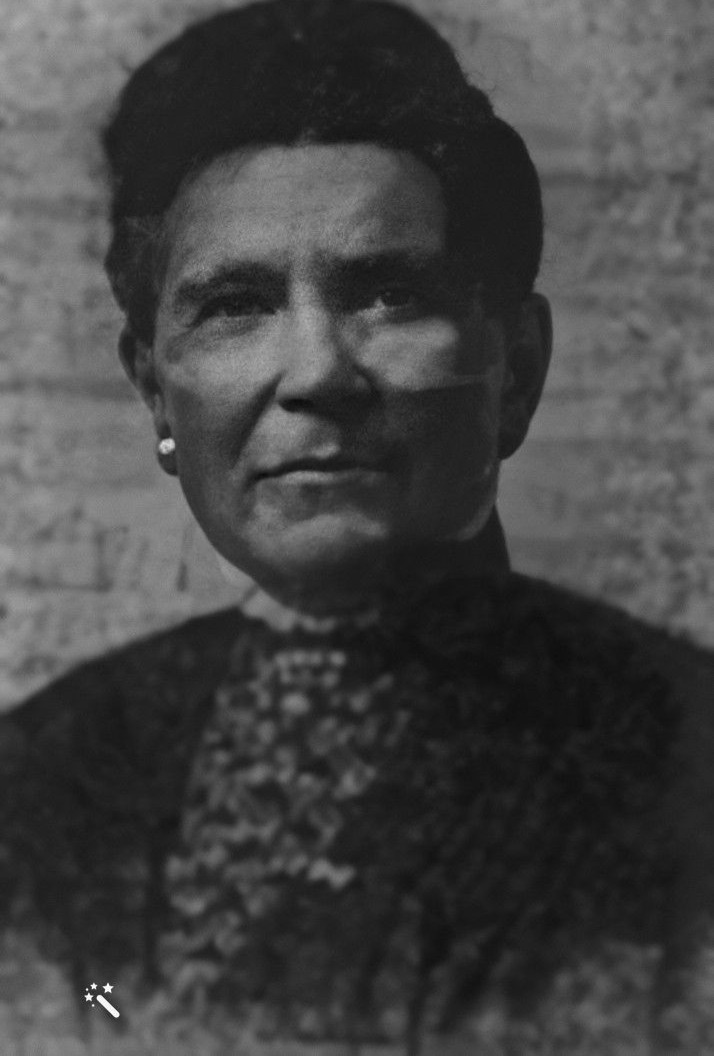
Author photograph of the portrait in the Continuum exhibit at the Buffalo History Museum
One woman wasn’t so lucky: Sarah Lovejoy
As St. John was saving her home, her neighbor lost her life inside of hers.
“My mother said saw an Indian pulling the curtains down from the window of the Lovejoy house opposite (465 Main St. today), and saw Mrs. Lovejoy strike his hand with a carving knife, and saw the Indian raise the hatchet,” Skinner wrote. “(6) “But as the door closed she could not know certain that he killed her. She did not dare go and see.”
When St. John had spoken earlier to that British soldier about saving her home, he told her, “I have just now seen a very unpleasant sight in the house over the way. The Indians have killed a woman and I am very sorry any such thing should happen.” (7)
St. John replied, “Well, I was fearful she would provoke them to kill her. I spoke to her and said, ‘Do not risk your life for property.’ She answered, ‘When my property goes, my life shall go with it,” Skinner recalled.(8)
“In the course of the day the house of Mrs. Lovejoy was set on fire,” Skinner continued. “Mother and sisters Maria and Sarah, with the hired man, old Mr. Pettingill, and others, went to the house and took the body of Mrs. Lovejoy out and laid it on a pile of boards by the side of the fence to so it would not be consumed by the fire.” They eventually extinguished the blaze, and returned Lovejoy’s body to her home, laying it “on the cords of a bedstead.” (9)
Skinner added to her narrative an account she read from an Ohio man who claimed to have been a boy when Buffalo was burned. The night Buffalo was burned his family hid in a barn.
“The next morning, they returned to the village and went to Mrs. St. John’s (my mother’s) and got some breakfast; and they then went over to see Mrs. Lovejoy. She was lying on the bedstead; she was a tall woman, was dressed in a black silk dress, with her long black hair hanging down or reaching through the cords and lying on the floor,” Skinner wrote. “He said they all stood about her and shed tears.” Three days later, “the Indians came again…and set the house on fire and she was burned in it. Mr. Lovejoy came and gathered her bones in a handkerchief and buried them.”(10)

Want to learn more about “The Burning of Buffalo”?
Listen to the official Buffalo History Museum podcast!
Take a walking tour, courtesy of Buffalo Place!
Heroine of Fort Niagara: Betsy Doyle

As British cannonballs dropped all around her, the wife of an artilleryman stationed at the fort, stood with the men atop a gun platform on the top floor of the fort’s Mess House on Nov. 20, 1812 during a fierce exchange of cannon fire with the British at Fort George across the Niagara River.(11)
Betsy (Elizabeth) Doyle was the wife of Andrew Doyle, and like many other military wives of the period accompanied her husband into the field. He was taken prisoner during the battle of Queenston Heights a month earlier, so she was left to fend for herself. She helped with the laundry, but when the fighting worsened that fateful day, she volunteered to do more than scrub sheets. She carried red-hot cannon balls (known as “hot shot”) from the furnace to the cannon and back again to replenish supplies. These weren’t regular cannon balls. They were heated in a specially designed furnace to between 1,200 and 1,500 degrees Fahrenheit!
Commandant Lt. Col. George McFeely praised her efforts:
“The extraordinary bravery of a female drew the attention of all our garrison. Her name was Betsy Doyle…She attended and served one of the guns with hot shot during the day of the cannonading. She would take the ball tongs from any of the men, run to the fire, take up hot shot, put it in the cannon, and run for another,” he wrote. “This she continued for the whole of the day.”(12)
One man was killed and five others wounded as Betsy kept loading hot shot.
Word of Doyle’s bravery spread. That spring, an aide-de-camp named William Worth wrote this when he visited the fort:
“Our curiosity was all impatience to see this sort of Joan of Arc; the younger part of us at once investing her, in our imaginations, with all the reputed charms of the Gallic amazon.” (13)
When the British took the fort a month later, Doyle fled with her four children on foot. They headed with the rest of the evacuees to Batavia at first, eventually traversing the Great Genesee Road and the Mohawk Turnpike, walking all the way to East Greenbush, NY.(14) This was the site of the Greenbush Cantonment, headquarters for the Northern Division of the US Army.
No one would think for a minute that walking all that way during the winter would be easy.
“She is now in my kitchen and convalescing from a fever,” wrote Col. Simon Larned.
Doyle served as a nurse and laundress at Greenbush for a few years, often not even being paid for her work. She fell ill and died in April 1819.
To honor her heroism, The Old Fort Niagara Association, in conjunction with the Niagara County Historian’s Office, placed a new interpretive plaque alongside the 1934 plaque from the Daughters of 1812 marker on the third floor of the French Castle – just about the same spot where Betsy ferried hot shot and helped fire the cannon all those years ago. In 2012, she was named a New York State Woman of Distinction for her bravery. In 2014, the William G. Pomeroy Foundation installed one of its blue and gold historic markers on Main Street in Youngstown bearing the inscription: “Heroine of Fort Niagara. Carried hot shot to cannon, stood sentry duty, fled 310 miles to Greenbush, NY when enemy attacked fort in 1813.”

Dunkirk’s Very Own ‘Pauline Revere’: Celea Sampson ‘Widow’ Cole

Celea Sampson Cole was the wife of Seth Cole, first settler in the Dunkirk area and a Revolutionary War soldier who had settled at the mouth of Canadaway Creek. Seth died in 1810, leaving Celea to raise their 10 children on her own.
When the war broke out, a small company of militia was stationed at “Widow” Cole’s house, “to protect the small commerce of the lake.”(15) On July 4, 1812, an American salt boat entered Canadaway Creek to get away from a British naval vessel in pursuit. The British ship anchored about a quarter mile from the Lake Erie shoreline and sent out its own small boat to catch the American vessel. The men in the salt boat quickly made landfall and set up their swivel gun in a big tree. They fired on the British, joined by American militia who had been hiding nearby. (16)
As the story goes, after hearing the shooting and realizing what was happening, Cole unhitched her plow horse and raced toward Fredonia, about 4 miles away, to gather reinforcements. She returned and remained at the battle scene, “actively engaged in carrying food and drink to the little army” (17) and even acting as general patrol. The British were defeated during what was called the first naval battle of the war (18), and Cole became a local legend.
The legend continued with a 1960 article by Elizabeth Crocker, Chautauqua County’s first historian, in The Fredonia Censor: “Mrs. Cole further showed her great patriotism by melting her pewter, including her precious tea pot, into bullets, which were used as ammunition by one of her sons for the purpose of repelling the British while he and the neighbors patrolled the area about the mouth of the Canadaway Creek.”(19)
The State of New York Society of the US Daughters of 1812 dedicated a plaque to Cole in 2017 at the Dunkirk Lighthouse and Veterans Park Museum:

It reads: “On September 26, 1812 and from this site, some of the first shots of the War of 1812 were fired by local militia at armed soldiers from the British Schooner Lady Prevost. When a small boat carrying the soldiers from the British ship was sighted rowing in pursuit of an American Salt Barge that had taken refuge at the mouth of Canadaway Creek, local citizen Celea Sampson ‘Widow’ Cole rode her horse to the settlement of Canadaway (Fredonia) to secure reinforcements. Recognized as a War of 1812 Heroine for her efforts to spread the alarm, the Widow Cole reportedly also carried food and water to the militiamen and melted her pewter dishes to make bullets for their use during the attack.”
The Celea Sampson Cole chapter of the US Daughters of 1812 was chartered in 2020 in Dunkirk.
References & More Info
1 – Buffalo Evening News Dec. 26, 1959; clipping viewed in BIOS scrapbook collection at Grosvenor Room, Buffalo & Erie County Public Library’s Central Library
2 – “Story of the St. John House and How It Was Saved from Destruction by the British and Indians,” by Martha St. John Skinner, daughter of Gamaliel and Margaret St. John.” Part of the collection entitled “Papers Relating to the Burning of Buffalo and to the Niagara Frontier Prior to and During the War of 1812,” published by the Buffalo Historical Society.
3- ibid
4 – “Buffalo: Good Neighbors, Great Architecture” By Nancy Blumenstalk Mingus Copyright 2003 Published by Arcadia Publishing, Chicago
5 – “The Village of Buffalo: 1800-1832,” by Wilma Laux. Buffalo and Erie County Historical Society. Vol. 111.
6 Skinner
7 ibid
8 ibid
9 ibid
10 ibid
11 “Today in History: Heroine of Fort Niagara” by William L. Clements Library, University of Michigan.
12 “Betsy Doyle: Hot Shot Heroine of the War of 1812,” by Catherine Emerson. WNY Heritage “The War of 1812” Vol. 1.
13 ibid.
14 “A True Heroine’s Saga: The True Story of a Very Real Betsy Doyle.” Trading card published by the Niagara Falls National Heritage Area.
15 “History of Chautauqua County, NY: From its First Settlement to the Present Time – with Numerous Biographical and Family Sketches” by Andrew W. Young, 1875.
16 “Salt Boats are A-Comin’ – The War of 1812 Touches Down in Chautauqua County,” by Jacqueline Trace. WNY Heritage: The War of 1812 Vol. 1.
17 Young
18 Young
19 “Fredonia and the War of 1812” by Douglas H. Shephard, 2012.